MisesWiki:Commons
| Archives |
|---|
For older discussions, enter the archives.
I see an issure with the money section of your ABCT page. What you're calling money i.e. the USD(FRN) and other fiat notes are not money it is a common mistake to call them that. What the FRN is, is a promissory note, or a money susbstitute. I don't know how you want to go about fixing it. Your call. Peace be with you! Diax (talk) 09:39, 17 May 2013 (MSD)
So I made some changes to that section mentioned above feel free to change it back if you don't like them. Peace be with you! Diax (talk) 09:52, 17 May 2013 (MSD)
- Hallo Diax! I have reverted the change after some consideration. The reason is that fiat notes are money (even if it's paper money). Check the definition of money for more details, but in short it is a commonly used medium of exchange - i.e. whatever is widely used for that purpose at the moment. But of course, the real question is whether fiat notes are a good form of money - and that's where we can put in some good arguments. :) Cheers, Pestergaines (talk) 14:18, 19 May 2013 (MSD)
Yes money is a medium of exchange but I'm also fairly sure that Mises talks about the promissary note being different from "pure" money in Human Action. Of course it isn't a big deal. Diax (talk) 04:23, 22 May 2013 (MSD)
- I think he refers to a situation when there exists the 'pure' money (gold, silver, etc.) and there are also promissory notes. While only the first is 'actual' money, both can circulate side-by-side. Confusing the two can have dangerous consequences, as Mises shows.
- These days, the dominant form of money are fiat notes that are not backed by anything. No confusion there. :) Pestergaines (talk) 10:44, 22 May 2013 (MSD)
Red links
New issue for discussion...a user recently reverted an edit, removing an internal link, stating "Please add article then link. No point having dead internal links." Is this a policy we are going to agree on? No red links on the Mises Wiki?
I was under the impression that we were more or less going to follow along with a typical Wiki (no, not just Wikipedia, virtually all wikis do this) policy in which wiki-fying the article is encouraged, so long as common sense rationale is used, and only terms which will be created as pages soon or that should be created because they would be notable and verifiable and useful and in-line with the goal of the wiki, are linked. Obviously Wikipedia is the easiest place to go for info and discussion on this, but that by no means means that that is the only place that has such a policy.
Of course, if this "add article then link/No point having dead internal links" is going to be the policy, a lot of pages are going to have to be revamped...including the Main Page. --John James 18:05, 23 May 2011 (MSD)
- I would say that red links should be encouraged, within typical bounds (no links for common words, etc.). This has also been discussed in the email list and red links were supported by Jeff Tucker. --Forgottenman (talk) 19:56, 23 May 2011 (MSD)
- Yeah that's what I figured. That's virtually the policy of every wiki. And if you look at that page linked above it mentions how one study showed that red links helped Wikipedia grow. Let's have at least one more weigh-in and then I think we might go ahead write up a quick something for the guidelines. --John James 01:12, 24 May 2011 (MSD)
- I very much agree to encourage red links within reason. For the record, I think I can also understand the reversion - the 'Austrian School' is our showcase page of sorts, so it would look better if all links were blue. But that may take quite some more time. :)
- Not sure if that needs to be in a guideline, but throwing it out there. Pestergaines 14:59, 25 May 2011 (MSD)
First of all, the reason given for the reversion was not that it was a "showcase page", and should therefore be held in a special light where red links should be discouraged. It was made quite clear that there is "no point having dead internal links" [period]. So that defense doesn't hold much water. And second, I think it's actually ironic...We're going to encourage red links because they have been shown to help the project grow, yet we're going to discourage their inclusion on the very pages which are more likely to be seen by more people (and therefore are more likely to have red links actually turn blue, as well as being the pages where growth and development is most important)?
And third, call me crazy, but I was of the opinion that the Main Page is more of a "showcase page" than even the Austrian School page...did anyone bother to count the red links there??
In my opinion this "red links are encouraged, but 'showcase pages' should not have any" notion is a pretty poor defense, and an even worse guideline. I agree with virtually every other wiki project...that red links are a good thing, as they help the project grow, as well as encourage new users to get involved. A red link staring right in the face of someone knows something about it could be just the motivation a potential new user needs to throw his hat in the ring and try out some wiki-ing. I think that can be even more valuable than the particular instance of growth...because one new stub is one thing...but a new "Wikian" is something else all together. And it can make a world of difference not only for our Mises Wiki project here, but for virtually every other one in existence. I say that's a good thing. --John James 20:31, 25 May 2011 (MSD)
- It's worth remembering that while red links do encourage new contributors, they are not helpful to readers. It's reasonable to want to have a "showcase" article (like WP's featured articles) that represents what we'd like all our articles to look like in the future. Such an article would probably not have any red links: any red links that existed would be filled in by new articles.
- Eventually we might want to have no red links on the main page, but my goal there is to show new editors as many places as possible where they can jump in and start contributing. --Forgottenman (talk) 19:17, 2 June 2011 (MSD)
- Bingo. That's my whole point. That's what red links do, regardless of where they are located..."show new editors where they can jump in and start contributing." Yes, I understand the appeal of "featured articles"...but articles don't get that way because of some centralized regulation mandating that this article and that article be deemed "featured", and then every thing pertaining to those specific articles is treated in some special manner so as to "make" them featured simply by the fact that they are treated differently than other articles. It's quite the other way around. Articles get featured because they reach a certain level of quality, and are recognized to be good examples of the kind of product the project is working toward. Individuals making their own free choices about what articles to edit, what edits to make, and how much effort is put into each of those is what creates a wiki...not some central governing body telling everyone which articles will be "showcased" and which ones can be ignored.
- If editors of the Wiki wish for a certain article to be of a minimum level of quality, they can freely edit that article as much as they want to improve it to that point. (They can even form groups to organize and point out articles that need the most work and encourage others to help contribute to those. That's what wikiprojects are all about.) And yes, part of what makes a quality wiki article is how well it connects to relevant and related articles. (This is why larger wikis like Wikipedia have some kind of "wikify" encouragement...because it improves the usefulness of the specific article, but also because it helps expand the wiki project.) And by the same token, that's why there is virtually no wiki that is in the practice of discouraging red links, let alone banning them...even if just on certain lionized pages.
- I really dislike the idea that articles need to be de-linked (i.e. weakened in their usefulness and diminished in their impact) because we want to showcase how great they are. That seems very contradictory in my view. --John James 23:47, 2 June 2011 (MSD)
- This is a very interesting and important issue. There is sometimes a tension between what is good for the reader and what is good for the editor, but I think the reader quickly learns that redlinks don't go anywhere. By the way — another topic to consider is whether to allow non-logged-in editors to edit, since a lot of times the newbies just want to make a quick change (e.g. typo correction) to one article and never edit the wiki again.
- I really dislike the idea that articles need to be de-linked (i.e. weakened in their usefulness and diminished in their impact) because we want to showcase how great they are. That seems very contradictory in my view. --John James 23:47, 2 June 2011 (MSD)
- With reference to the issue of redlinks, I have installed on my wikis (e.g. Libertapedia) an extension I wrote, which links to Wikipedia if the wikilinked page doesn't exist on the local wiki. I used to have it set up to actually detect the page existence on Wikipedia, as follows:
- IF the page exists on the local wiki, then bluelink to the page on the local wiki. Otherwise,
- IF the page does NOT exist on the local wiki, but it exists on Wikipedia, then bluelink to Wikipedia. Otherwise,
- IF the page does NOT exist on the local wiki, nor on Wikipedia, then redlink to the page on the local wiki.
- Right now, the daemon I used to run to update the table of existing Wikipedia page titles is down, so I have simplified the extension to always bluelink to Wikipedia if the page doesn't exist on the local wiki. That extension needs some work before it's ready for prime time but you get the gist. It could be possible to make some other interesting and useful tweaks to it, to allow the reader to choose which wiki he wants to go to when he clicks on a redlink or bluelink. E.g., he might be notified that the page exists on both the local wiki AND Wikipedia, and given the option to choose. Or, in the event it exists on Wikipedia but not the local wiki, he could choose between visiting Wikipedia or creating the article on the local wiki. Nathan Larson (talk) 09:38, 7 August 2012 (MSD)
Keep the red links. I'm new here and I wouldn't even have bothered to join the project had it not had some obvious red links. I mean ya'll don't have a page on coercion I'm going to write it now. Anyway let me know what ya'll think about that. Peace be with you.Diax (talk) 06:17, 15 May 2013 (MSD)DiaxDiax (talk) 06:17, 15 May 2013 (MSD)
I expanded the Negative Rights and the Positive Rights articles. However I do not know how to add references. If someone could let me know I would appreciate it. Sorry for the inconvience. Peace be with you! Diax (talk) 04:48, 22 May 2013 (MSD)
- No problem! In short, check out other pages - see e.g. this recent one. Click on Edit and see what's in there - note the 'Reflist' section close to the end of the page, that's what will produce the whole references block. Then note the 'ref' sections that look like this:
- <ref name="Britannica_Cooke">Encyclopædia Britannica Online. [http://www.britannica.com/EBchecked/topic/136088/Jay-Cooke "Jay Cooke"], referenced 2013-05-21.</ref>
- (Here's the official documentation.)
- The 'name' part is only necessary if you reuse a reference. Often, you can get away with something like this:
- <ref>Encyclopædia Britannica Online. [http://www.britannica.com/EBchecked/topic/136088/Jay-Cooke "Jay Cooke"].</ref>
- So it involves a little typing, but after you do it once or twice, references are easy. I've added them to the Negative right page. Check the changes I've made and try it for yourself - and let me know how it works out for you! (See also here for some more tips on how to make good pages.) Cheers, Pestergaines (talk) 10:32, 22 May 2013 (MSD)
So I saw that you said that the part about the founders pulling alot from John Locke needed to be cited (this is in the negative rights article). I'll agree that it would be nice if such a citiation existed but I'm not sure that it does. I put that in there because it's fairly obvious. "Life, Liberty, and pursuit of happiness" is essentially a direct quote from Locke; "life, liberty, and property". You know that's so obvious that someone has to have expressed it somewhere before... Just got to find it.70.59.102.81 19:49, 22 May 2013 (MSD)
Main page revamp ideas
As per some discussion on the group message board, I agree the main page could stand some new additions...
First off, I think it's pretty obvious if this Bounty board incentive is going to be effective, we need to advertise. I think we should have either a section on the main page—perhaps replace one that is on there now, such as "this week in history"—or a prominent link to a full page that tells of all the projects going on, the articles that need creating and expanding, the promotions currently running, etc. And of course including all the useful links for that kind of thing (e.g. MisesWiki:2011 article improvement drive, MisesWiki:Most wanted, MisesWiki:Typos, etc.)
I think it would be really nice to have a kind of quick overview of what's going on here and what specifically someone can do to help out. I think people would be more inclined to participate if they were aware of a requested article or some other project. Even aside from the prizes to be won, I think having a defined mission and objectives is really useful in helping someone feel like they're making a difference. Kind of like the "Operation Stub" drive. It's really motivating to see a request for a page that is currently a red link, and being able to see the instant result of having created a new stub and having the links go blue and seeing the article count increase...or seeing an article slowly but surely get more and more fleshed out as you collaborate with other editors and reach featured status. I think developing a sense of community would definitely entice editors to contribute as well as keep coming back, and a good way to do that is have a prominent display of what is currently being focused on.
Input? --John James 16:26, 29 July 2011 (MSD)
- I very much agree. What about inserting a large "What can I do?" section into the middle of the main page, with links to the various projects and initiatives one can help out?
- And yes, we'll need to do a lot of advertising - at the latest when the 'improvement drive' is finalized. Pestergaines 17:39, 29 July 2011 (MSD)
- I like the ideas, but I don't like removing the only part of the main page that is regularly updated. I'd prefer dropping "current events," perhaps incorporating it into the "this week in history" box.
- I think the Community Portal page should serve as the "full page" containing all the things going on. Go ahead and put together a box like Template:Current events (maybe call it Template:What can I do or Template:Get involved?) with a few of the important things you are talking about, along with a link to CP. The main page is very plug-and-chug, so you can just pull {{Current events}} off the main page and substitute your new one. --Forgottenman (talk) 17:57, 29 July 2011 (MSD)
Semantic wikis
Does anyone have experience with semantic wikis? I keep being recommended to introduce the feature to MisesWiki. I can see that it might be practical, but can't really tell what in the end the impact would be, besides a lot of work. Looking for some insight here. Pestergaines 16:59, 26 August 2011 (MSD)
- I'll give an example of how this could be helpful. Let us say that we want a table that displays all countries by their indexes in the Infoboxes. In Template:Infobox Country, you would find where they ask for each index, and put a property tag such as[[Economic Freedom Index::{{{row 10 info|}}}]] (that template needs to be more semanticly named). Then, you would use the following code (with templates from http://dnd-wiki.org/):
- {| style="text-align:left;" class="sortable"
- |-
- ! Name !! Economic Freedom Index !! Corruption Perception Index !! Doing Business Ranking
- {{#ask: [[Category:Countries]]
- |?Economic Freedom Index
- |?Corruption Perception Index
- |?Doing Business Ranking
- |format=template
- |template=Table Row
- |link=none
- |limit=9999
- }}
- |}
- And then the table would generate, and changing the facts on the individual pages would cause these tables to update (within 24 hours usually) automatically. It allows for Wikis to implement the policy of DRY (Don't Repeat Yourself). And as I've said a few times already, I've got quite a few templates for making SMW easier to deal with. --Havvy 23:05, 26 August 2011 (MSD)
- What would be the effort needed to migrate the wiki, and keep it updated? How much would our users need to learn about the syntax and what will it do to the readability of the page source code? Pestergaines 14:17, 31 August 2011 (MSD)
- The effort involved for migrating the wiki is as follows:
- Installation and configuration. I've never installed SMW (or any other Mediawiki extension), but I don't expect this to take very long. Configuration might need to be done for which namespaces it is enabled on. I cannot recall. One choice that has to be made is whether or not to show properties at the bottom of a page.
- Planning properties. This is where somebody (or a group of people) sit down and decide on the initial properties to have on the wiki. This can easily be streamlined by looking at the current category structure, and if there is the equivalent to a morpheme (for example, categories such as Books by Ludwig von Mises, Books by Bastiat, ect.) and turning those morphemes into properties (in this case, the property would be called Author).
- Implementing properties. This is where the above plan is realized. Using the example from planning, one would look at the book articles in general, and see if there is a template where the author is placed. If so, that template is edited so that it adds the property to it. If done correctly, a content editor won't have to deal with the properties themselves. Also, categories have to be renamed. Books by X would be renamed to Books.
- Implement navigation. If you can think of a table that would help users find information, it takes all of five minutes to create generally. Some of the queries you can think of (the ones you want specific to a certain entity) can be templated.
- The effort involved for migrating the wiki is as follows:
- For the syntax, just knowing how to set properties is enough. Taking the dnd-wiki help page on it and modifying the examples at the bottom to fit this wiki should suffice. It doesn't go over tables, but copy & paste from a working table suffices for anybody who has needed to do so.
- For the readability of the source code, it all looks like templates and links, and in many cases, is easier to read, since implementation details are hidden. --Havvy 17:35, 7 September 2011 (MSD)
Semantic MediaWiki has a number of advantages beyond making it easier for academics and others interesting in running queries to gather data. It can also be used for putting together dynamic tables within the wiki itself, creating more powerful templates, automating labor-intensive tasks, and more. I will offer the caveat, though, that as of a few years ago SMW had some troublesome bugs, and I'm not sure whether they have made a lot of progress since then.
A lot of sites that have SMW installed don't make much use of it. This may be partly because any templates imported from Wikipedia won't use it. To get the full benefit, you have to be willing to get creative in coming up with uses for it, and put in the work to implement those ideas.
The academic community is, of course, strongly in favor of SMW. I think it will do an important favor to the wikisphere and the world to be part of the effort to realize SMW's potential. That might have to include fixing some bugs. How much you want to focus on that, as opposed to more MisesWiki-specific concerns, is up to you. One last caveat — if you use caching, there may be some performance implications to consider.
Here are a couple examples of how I used SMW to make my life easier. On my wiki, we had a "Today's featured article" (TFA) page for each day. Perhaps you are familiar with how on the Wikipedia main page, the TFA blurb is followed by a list of three "Recently featured" articles — specifically, those from one, two, and three days ago.
It was a pain in the neck to enter those manually, and if I changed my mind and substituted a different featured article for a particular day, I had to edit three different featured article blurbs that referred to it as a recently featured article. To eliminate that chore, I put some sort of SMW code in each blurb — I think it was something along the lines of featured::Libertarianism if the article in question was libertarianism — and that associated that page with that featured article title. So then, all I had to do was use a bot to prepopulate a bunch of featured article blurbs with some SMW code telling it to grab the featured article title from the previous three days' blurbs. Specifically, Recently featured: {{#ask: [[Libertapedia:Today's featured article/May 14, 2010]]|?featuring=}} – {{#ask: [[Libertapedia:Today's featured article/May 13, 2010]]|?featuring=}} – {{#ask: [[Libertapedia:Today's featured article/May 12, 2010]]|?featuring=}} I could do that for a year in advance if I wanted, and it would eliminate the need to edit the "Recently featured" wikitext later on for any reason.
Another example was when I had a bunch of articles on political prisoners, and wanted to enter various data (such as mailing address) just once per page. E.g., I could change the data in the infobox template and it would change it in the article text, or vice versa. Unfortunately, this didn't work. I sought support from the listserv and they said it was probably a bug in SMW. At that time, I didn't feel like familiarizing myself with the SMW code and hunting down and fixing that bug, so I abandoned that project. There is still enough functionality that works, though, for you to accomplish some useful tasks with it. Nathan Larson 03:27, 9 July 2012 (MSD)
The Big One
It is coming... can you feel it? Pestergaines 19:15, 30 January 2012 (MSK)
- You mean another Great Depression, or something even worse? I'm not sure if the conditions are ripe for that to happen. We have a lot of Keynesians in office, ready to worsen and prolong any economic slump that develops, but we don't have the equivalent of a Smoot-Hawley Tariff to destroy global trade. Nathan Larson (talk) 09:25, 7 August 2012 (MSD)
- Sorry, didn't want to produce any panic. The Big One in question was the 1000th article on Mises Wiki. :) Pestergaines (talk) 03:41, 12 August 2012 (MSD)
I had the misfortune to walk into the living room whilst the roomies were watching the news the other day and CBS was refering to the '08 bubble as the "Great Recession". I found that highly entertaining. Diax (talk) 20:11, 22 May 2013 (MSD)70.59.102.81 19:51, 22 May 2013 (MSD)
Sysop promotion request
I request promotion to sysop so I can assist with maintenance of the MediaWiki namespace, vandalism cleanup, template importation, miscellaneous requests, etc.
We may want to consider being pretty liberal in giving out the sysop tools, since that is is accordance with the spirit of the "wiki way," which is to make mistakes easy to correct rather than hard to make. The more sysops you have, the faster vandalism gets deleted and so on. It tends to improve the quality of the wiki.
What makes sysops more of a detriment is when the rules of engagement are set up in ways that produce perverse incentives. E.g. if pages are allowed to be speedily deleted for questionable reasons, then the more sysops you have running around speedily deleting stuff, the more good content will tend to get deleted quickly. The sysops are similar to cops or security guards — if the laws (and overall system) are good, then these officers tend to be beneficial; but if the laws are bad, then the situation is similar to that described in the Declaration of Independence, of having "erected a multitude of New Offices, and sent hither swarms of Officers to harass our people, and eat out their substance." They can only harass and eat out the substance to the extent that the nature of the system allows and encourages that to happen. Here, our hierarchical system (ultimately reporting to the Mises Institute) and mistrust of mob rule prevents the kind of abuses we've seen on other wikis. Nathan Larson (talk) 09:25, 7 August 2012 (MSD)
- Hallo Nathan,
- the Mises Wiki is a bit conservative with awarding the Administrator privileges. These days - *fingers crossed* - the wiki is actually quite stable and does not need much of an administrating effort. Most mistakes are easy to correct for most users, and even templates are easy to create (in case you want to make some more involved changes in this area, John James is our template guru). We also don't tend to speedily delete pages, far from it! The biggest issue for admins has been the recent flood of spam, which was thankfully contained - in a large part also due to your help! I do not see a particular need to expand the ranks of Admins right now, I hope you understand.
- Best regards, Pestergaines (talk) 16:38, 12 August 2012 (MSD)
- Yeah, on a wiki with the type of user behavior patterns (largely molded by the wiki's culture, which in turn is greatly affected by its rules, including the wiki mission) that are encountered here, the issues that require sysop intervention do indeed tend to be few and far between. That is assuming spam problems remain solved; those spammers are always innovating, making it necessary to find new countermeasures. It's a continual arms race. Nathan Larson (talk) 19:23, 12 August 2012 (MSD)
Do people seriously bother to create bots to put up nonsense pages? Seems a little ridiculous that someone would waste their time like that... Perhaps I'm just not cynical enough...70.59.102.81 19:56, 22 May 2013 (MSD)
- They do, but mostly it's just spam, where the motivation is cold hard cash. I assume most of the edits that are complete nonsense are simply the generation of 'plausible' traffic to cover up other spam. For some people this is clearly worth the effort. Pestergaines (talk) 01:59, 24 May 2013 (MSD)
- Then again, someone (or rather something) just posted a remarkably coherent and quite polished page about Essays. I have deleted the page, but actually hope that it was a spambot and not a misguided human (and that I just didn't fail the Turing test...).
- So this may be the future of spamming - lots of crap with some well-written borderline cases that creep up on websites and sometimes slip through. Guess it's only gonna get worse. Pestergaines (talk) 00:11, 29 May 2013 (MSD)
- http://xkcd.com/810/ Wow, that essay on essays truly was a class act; it even used the word "learnt". I was very impressed at their subtlety. Also, it wasn't that long ago that an IP spammer hit the "undo" button on my revert of his spam. It made me take a second look at what was posted, because that's ordinarily behavior only humans have engaged in. Nathan Larson (talk) 09:03, 26 November 2013 (MSK)
Wiki configuration issues
Given our webmaster's other duties, does he have enough time to give wiki issues prompt service? I hope I'm not being too unreasonable by saying that and I apologize if I'm displaying lack of tact in how I'm addressing this. I just see certain issues, most notably the CAPTCHA problem (which is of critical importance to the wiki), remain unresolved for long periods of time, despite reminders.
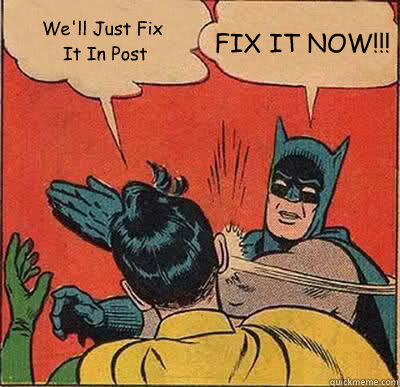
I don't know what level of priority the Mises Institute wants to give the wiki at this point. Being such a wiki enthusiast, my own sentiments toward waiting till other matters have been dealt with to resolve wiki configuration issues tends to be rather similar to those expressed by Batman concerning post-production fixes. But I realize the Mises Institute and those who seek to help it also have other matters on their plates besides the wiki. So I'm just going to throw that out there and leave it at that. I don't know whether it would be appropriate to lobby for more technical assistance resources, or how would be the best way to go about that. Nathan Larson (talk) 19:23, 12 August 2012 (MSD)
Today in history
We could, if we wanted, have more than the a few entries available for each day's "Today in history". We could use mw:Extension:Random or a similar extension to select, say, two items out of a list for each day. That list could be hundreds long; the more the merrier, as long as they're high-quality, because that means more possibilities for users to see on different visits to the site. Nathan Larson (talk) 23:25, 5 October 2012 (MSD)
Mass imports
A lot of wikis, in their early stages, have done mass imports of content. E.g., Wikipedia imported a bunch of Census data on various localities. I wonder if we might do well to import, say, the contents of Mises Made Easier as articles. Although they would be a bunch of stubs, it might be better than nothing. Nathan Larson (talk) 19:54, 20 October 2012 (MSD)
I actually signed up because I was couldn't work out what "catalactics" meant. It was only as I started trying to figure out how a wiki works that I found this reference to Mises Made Easier and found the answer there. Mises Made easier is more like a dictionary than an encyclopedia, but if it provides the stubs from which stuff branches out, mass importing it sounds like a great idea. Labcoat (talk) 02:49, 22 November 2013 (MSK)
- Someone will have to actually muster the initiative to actually implement this idea, though. Nathan Larson (talk) 05:06, 22 November 2013 (MSK)
- For things like these I suggest to create a Call to Action. Mises Made Easier was already considered at some point (see the talk page) but other topics seemed more attractive at the time. @Labcoat - if you were equipped with tools that would make the import easier, would you be willing to work on it? (It would still involve going through all the topics manually and doing some editing, but the copying and pasting would be taken care of. That doesn't mean you have to do everything by yourself, the question is only if you are willing to do some of it.)
- (And aside - if you've learned a bit about catalactics, feel free to create a page or at least a stub about it. ;) ) Pestergaines (talk) 17:36, 24 November 2013 (MSK)
- For the catallactics article, one could start by borrowing Wikipedia's content. I think an automated tool would be the best way to import Mises Made Easier. We could program a bot to do it, or we could run a script on the server. It's probably better to use a bot; the code would then be more reusable for other purposes, because it's easy for bureaucrats to create bot accounts, but only a few people are going to have shell access to the server.
- (And aside - if you've learned a bit about catalactics, feel free to create a page or at least a stub about it. ;) ) Pestergaines (talk) 17:36, 24 November 2013 (MSK)
- I see this as requiring a few steps: (1) convert the Mises Made Easy page into a format that can be used by the bot. Ultimately, it's going to be turned into an array of glossary entries. It'll be necessary to convert the HTML into wikitext and make a few other changes (e.g. making the page titles bold); that shouldn't be too hard, because it'll be only a few kinds of things such as italics and hypertext that need to be converted. It might be good to go through that list and decide what categories you want those pages to be in; we can then include those from the beginning rather than later going through page by page and making edits one by one. (2) Create a clone of Mises Wiki as it exists right now and do a test import of the articles to it. Wait, say, a week for everyone to have a chance to review the new pages for problems before we do the import here.
- (3) Create a new namespace on this wiki, e.g. MME:, to which we will import all this content. This will allow us to easily undo the changes if needed; e.g. if we discover problems at this point that we missed earlier, we can do a mass deletion of everything in that namespace, if needed, without disturbing our existing mainspace. I've generally found it's easier and cleaner to delete a bunch of robotically-implemented mistakes than to revert them. (4) Move everything from MME: to mainspace, unless there are already articles there with those names. (5) See what remains in MME:; either incorporate it into existing articles or delete it. (6) Get rid of the MME: namespace, once there is nothing left in it that's of further use.
- I mentioned below the possibility of switching to a new glossary system enabled by Semantic MediaWiki or mw:Extension:BedellPenDragon. Prior to the importation of all those articles would be an excellent time to go that route, if we're going to do it. I've been pretty pleased with how it's been working out on my other wikis (PolyWiki.org, ChildWiki.net, and SuicideWiki.org) because it's such an efficient system for creating glossaries, quote lists, etc. and main page summaries simultaneously. However, those are all one-editor sites, and the extension was just created last month.
- Also, I think we'd want to discuss what the templates should look like. E.g., should the parameters have names (like in Template:Cite web, which has parameters "url", "title", etc.) or should they be numbered (like in template Template:Md? The latter is what I've been doing because it saves typing and is perhaps easier to read, but it makes it harder to change the parameters later, because you have to migrate all the transcluding pages over. One of MediaWiki's main weaknesses is that it doesn't have much metadata functionality; this is one way to solve that. The other alternative would be Semantic MediaWiki, which has a larger community of users.
- To be honest, if I were you, I'd go with SMW, because then you're not dependent on me for maintenance of the extension. MediaWiki upgrades are always breaking extensions, so that the developers have to write new versions. The idea BedellPenDragon embodies is a good and useful one, and there needs to be an extension with that functionality, but there are no other developers maintaining that extension, and I don't know how long I'm going to be around. Maybe for years, maybe not. Then again, we could say that about anyone.
- I just noticed, some of this is going to need some manual intervention. E.g. Verstehen should be a redirect to understanding, not its own separate entry. Nathan Larson (talk) 07:29, 25 November 2013 (MSK)
- I was thinking of doing something smaller, since it will require some editing on every page (not just categories, but also linking to other pages, if no further editing is necessary). And if we have to pre-decide which article gets which category, it means we'll have to revisit each page at least two times anyway.
- That being said, having a universal import bot/script would be really neat, the significant time investment is my main concern here; I may not be able to help out with it much. Will we make use of it again?
- As for Semantic MediaWiki BedellPenDragon - the first is worrying as it is a one-way ticket that makes things more complex for new users (higher barriers to entry), the other is a indeed a new product with little support and no user base. I've been skeptical about these extensions for a while; then again, I'm mainly focused on (or to be honest, obsessed) with content and not as much with the presentation side of things.
- My general preference is to make things simple and easier to maintain. These days, I don't expect too much activity, more of steady slow growth with occasional bursts, which I'd like to accommodate. We'll see! Pestergaines (talk) 02:37, 26 November 2013 (MSK)
- And here's a link for the whole thing: MisesWiki:Call to Action/Mises Made Easier Pestergaines (talk) 02:51, 26 November 2013 (MSK)
- Yeah, it's easier (and in fact inevitable, to some extent) to follow Wikipedia's lead, as far as extensions are concerned. Then there's pretty much a guarantee that it will be well-supported and that it will be compatible with any content, templates, etc. we might import from Wikipedia.
- And here's a link for the whole thing: MisesWiki:Call to Action/Mises Made Easier Pestergaines (talk) 02:51, 26 November 2013 (MSK)
- It is indeed a one-way ticket when we implement a metadata solution — theoretically. It could be undone and migrated to a different system using a sufficiently sophisticated bot. We don't have a lot of bot developers around here, though. I think once Wikidata comes fully online, we'll end up integrating with it (much as we already integrate with the Wikimedia Commons) and maybe setting up our own MisesData installation to supplement it. Unfortunately, it might be a long time before they get around to finishing the Wikidata implementation. Nathan Larson (talk) 09:10, 26 November 2013 (MSK)
- Updated. Pestergaines (talk) 02:01, 10 December 2013 (MSK)
MediaWiki 1.20
MediaWiki 1.20 has been released. Here are the full release notes. I didn't see anything major in there. MW 1.19 will continue to be supported for the next two years, so unless there is some capability v1.20 offers that we particularly need, it might be just as well to stick with what we have. Nathan Larson (talk) 20:20, 9 November 2012 (MSK)
Asirra cracked
Word has it that the spammers are starting to crack Asirra. We seem to be getting a spam rate of about one a day. I forget what it was like before Asirra; wasn't it about five a day? Anyway, another option would be to use mw:Extension:QuestyCaptcha. We could ask Austrian school-related questions like "The Ludwig von Mises Institute motto is tu ne cede _____ (fill in the blank)" or "What was the first name of the wife of Ludwig von Mises?" People knowledgeable about the Austrian school would have the reward of not needing to google for the answers, and those who did have to look it up would learn something. Nathan Larson (talk) 09:44, 11 November 2012 (MSK)
You could always ask simple math problems but declare said equations as a string so that the bot won't be able to interpret the numbers.Diax (talk) 19:59, 22 May 2013 (MSD)
- I've seen that done. I forget which wiki it was. Nathan Larson (talk) 05:07, 22 November 2013 (MSK)
WikiNode
Wikiindex has an interesting idea about wikinodes. See http://wikiindex.org/WikiProject:Wiki-Noding : "We think every wiki needs a page (called "WikiNode") that briefly describes the wiki and the top 7 or so closely related wikis." Here is their wikinode. It sounds like a good idea in theory, but apparently it never caught on. Maybe it should. But what would be the most closely related wikis to this one? Nathan Larson (talk) 19:33, 20 November 2012 (MSK)
Voluntary Cooperation
I've created a new Call to Action: Voluntary Cooperation. Let's see if anyone dares to join! Pestergaines (talk) 17:10, 30 November 2012 (MSK)
- I hope to complete the project soon. There is now an index page called Privately supplied public goods - please check it out and let me know what you think. Pestergaines (talk) 21:48, 25 February 2013 (MSK)
- Moved project into the inactive ones, could certainly have more content but it is more or less complete. Anyone feel free to reopen it. Pestergaines (talk) 10:23, 26 November 2013 (MSK)
Early spring cleaning
Having some time at hand, I started to make a long overdue cleanup of last year's pages. Some need to be overhauled completely, some polished, some moved into Essays. It is a lot of work, so help is invited, as always. Pestergaines (talk) 18:57, 4 January 2013 (MSK)
I'd love to help ya mate just not sure how. I don't have any expierence working on wiki's etc... Diax (talk) 23:35, 22 May 2013 (MSD)
- The cleanup is basically finished. If you wanna help out with the messy bits, there is a whole Cleanup project. But if you want something more topical, check out the current project Robber barons, there's quite a few of those guys left.
- Learning how to use a wiki isn't hard - it's only matter of dilligence and finding the topics that really interest you and you want to learn about more. Pestergaines (talk) 02:09, 24 May 2013 (MSD)
Outreach
It is sometimes not easy to see what kind of impact these pages have. They may seem too obscure or not noticed by anyone. If that's the case, what's the point?
However, the Mises Wiki is being used as a resource, in arguments, debates and forum discussions all over the Internet. It could be certainly more, but it is out there. How can you find out? Google "wiki.mises.org" -site:mises.org. Then, with the search tools limit the results to last month or whatever criteria you prefer. Dig in.
The biggest hits can be surprising, like "Principle of non-aggression". :)
The wiki has also high Google rank on obscure keywords like regime uncertainty (#1!) and quite a few 19th century panics. Google ranks original content higher, and remixing of other content - instead of simply copying whatever is on Wikipedia or other articles. Diligent linking also pays off. Plus, for some articles - such as regime uncertainty or some of those panics, Wikipedia doesn't have anything or very little. It's not hard to be better than that.
So, don't get discouraged. This stuff is used by people out there. Pestergaines (talk) 21:55, 2 February 2013 (MSK)
- As it turns out, Google is not the end-all resource to find out what links a page. There are websites better equipped for that - here's one (allows only a few limited views a day though). Turns out there's way more sites using this wiki! Pestergaines (talk) 16:33, 30 March 2013 (MSK)
- Just so you know, we have mw:Manual:$wgNoFollowLinks set to false on this wiki, so we are also giving a pagerank boost to the pages our articles link to. There was a debate about the wisdom of doing this throughout the wikisphere; virtually all developers said "hell no" when I suggested changing the default for MediaWiki. However, I have always had that configuration settings switched off on all my other wikis, and have never had a spam problem. I suspect that Google may indirectly reward us for keeping it switched off; see mw:Manual:Costs and benefits of using nofollow. Leucosticte (talk) 20:21, 24 January 2014 (EST)
The Regression Theorem and Bitcoin
So I'm dong research for a paper and I can't seem to find a place which makes the arguments for why Bitcoin violates the regression therom etc... Was wondering if ya'll could direct me to where that argument is made? Also someone with more knowledge than I should probably add a "Critism" section to the Bitcoin page and talk about the regression therom there. Thanks for your time. Peace be with you all! - Diax
So what exactly is the argument about that Bitcoin violates the regression therom or some such? It would be nice to
- Don't know where that particular claim comes from, here's one article that comes close, and this list seems to be a good one to go by, but that's just two bloggers. This one links to many other articles where other critiques may be found.
- Otherwise, it seems like most articles speak about some anonymous 'Austrian economists' that keep doing that somewhere and fail to provide a link.
- If you find good articles about Bitcoin, critiques or not, please add them to the page! (If they are not as good, but still contain valid points, throw them on the Talk page.) Someone may sort them out one day. Any Bitcoin experts out there? (Follow through with your research and may become one as well. :) ). Cheers, Pestergaines (talk) 01:32, 29 May 2013 (MSD)
It's Mises that created the Regression Therom in [i] The Theory of Money and Credit[/i] (1912) It's him expanding on Menger's theory on the origin of moeny. The basic argument as far as I can tell is that in order to transition from a barter economy to a money economy it would be necessary for a commodity to have utility in trade beyond it's barter value and thus it becomes a medium of exchange.
I think the claim is that because bitcoin does not have a commodity backing it cannot be money (in the long run) and just like fiat is doomed to fail...Diax (talk) 01:43, 29 May 2013 (MSD)
- The concept is well-known (hmm, that page could also use some improvement...), the question is where the claim about Bitcoin violating it comes from. Need to do some more googling! Pestergaines (talk) 10:20, 29 May 2013 (MSD)
- As many of the articles about this topic explain, that is not what the regression theorem says. What I am wondering now though, seeing all that hoopla about it, is there any notable Austrian economist that claims this, or is it really just a few bloggers sniping at each other? One day we'll know it all. Pestergaines (talk) 01:59, 30 May 2013 (MSD)
Where to contribute
The question has been asked repeatedly. Where should one add to or create more new pages?
The simplest answer is to find something you are really interested in, it's the most fun and you probably already know a lot about it. And if not, it's only natural to want to learn a bit more - and help others as well. But let's offer some inspiration:
- Most wanted pages, by missing links: This list shows which nonexistent articles have the most links pointing to them (some are just obscure links from templates and the like).
- Most wanted pages, by vote.
- A long list of desired topics is here.
- Check out the Call to Action (and it's talk page) - it contains several projects and suggestions for more, and there's plenty of things that can be still added. Voluntary Cooperation is particularly wide. The current project is Robber barons, there's quite a few of those guys left.
- For those who don't mind to get their hands dirty, check out the Cleanup project.
- If you are interested in a particular country or countries, there is a good base to expand on. What is going on in that particular corner of the world anyway? How intrusive is the state? How's free is the life over there (and what's the quality of life)? What's of special interest to Austrians or libertarians?
- Are you more of a single-issue person, interested in a particular organization, person, or concept? Well, then see if a corresponding page already exists, how extensive is it, and what about all the related topics?
- Are you interested in a larger, overarching topic or a group of topics? See if there's a summary page and what subtopics can be created or brought up to the level.
- Are you into history? (Gilded Age? Great Depression? Financial crises? History of money and banking?) Writing a wiki page is a great way to learn about history.
- Are you more into the theoretical aspects of economics and praxeology? Create away whatever is still missing.
- Would you like to create good arguments for or against whatever discussion is currently raging on the Internet? There is as well!
And there's so much more...
(Anyone has more ideas? Add them here!) Pestergaines (talk) 21:31, 3 June 2013 (MSD)
- People can also offer constructive criticism about what they would like to see changed or added to the site so that it will better serve their and others' needs. It's useful to get input even from those who don't edit the site on a regular basis. Nathan Larson (talk) 17:00, 4 October 2013 (MSK)
1400 pages
Rather quietly, the wiki has just reached 1400 pages with the Second Bank of the United States. Good news in what is otherwise a period of downtime. Pestergaines (talk) 13:39, 10 July 2013 (MSD)
Teaching Austrian Economics
Are there any Austrian School Textbooks that can be used to teach college leval Macro & Micro economics. Everything iv'e found teaches Keynesian Economics.
- I'd say if you start with Human Action and Man, Economy and State you should be well provided for a start (of an advanced education), but I've asked this question elsewhere to see if there's a better answer. Pestergaines (talk) 01:32, 15 July 2013 (MSD)
- Check out the link above, there are some good answers in the forum thread now. Pestergaines (talk) 10:17, 17 July 2013 (MSD)
Upgrade to MW 1.21
If there is no objection, I will upgrade the site to MediaWiki 1.21. Nathan Larson (talk) 04:10, 4 October 2013 (MSK)
- Upgrade complete. Nathan Larson (talk) 10:31, 5 October 2013 (MSK)
Debate -> Dialog, Fun -> Miscellany
I changed the namespace names from Debate: to Dialog: (see rationalwiki:Debate:Should_it_be_Dialogue for some thoughts on that) and from Fun: to Miscellany:. I figured Miscellany: would be a good repository for any off-topic or otherwise hard-to-classify stuff. Debate: and Fun: are still available as namespace aliases. The main downside I can think of is that the name of the "Dialog talk:" namespace sounds slightly redundant. Nathan Larson (talk) 16:58, 4 October 2013 (MSK)
- I'm going to retire the Dialog: namespace and move all the content to Miscellany: if there's no objection. Even RationalWiki: has found that the Debate: namespace is kinda pointless; they write, "For some reason this namespace is not very well used. The function is largely usurped by talk pages." Nathan Larson (talk) 00:58, 29 December 2013 (MSK)
Another libertarian wiki
For later study, found by chance: "A Voluntaryist Wiki", appears to be a rather private affair focused mainly on argumentation. Pestergaines (talk) 23:44, 20 October 2013 (MSK)
- Added to the wikinode (and to wikiindex). Nathan Larson (talk) 04:57, 21 October 2013 (MSK)
mw:Extension:BedellPenDragon
Hello, I've written mw:Extension:BedellPenDragon, which adds metadata, glossary, essay list, and quote list features to MediaWiki. Perhaps the best way to explain it is by example. All of these features you can see either displayed or available from the PolyWiki main page.
- Articles:
- Transclude Template:FASummary to add themselves to Category:Featured articles, from which are chosen the Randomly featured article.
- Transclude Template:InvisiblePageSummary to add entries to:
- Essays:
- Transclude Template:FESummary to add themselves to Category:Featured essays, from which are chosen the Randomly featured essay.
- Transclude Template:InvisiblePageSummary to add entries to:
- Quotes:
- Transclude Template:FQSummary to add themselves to Category:Featured quotes, from which are chosen the Randomly featured quote.
- Transclude Template:InvisiblePageSummary to add entries to:
Examples of how this is done:
- Article example (view source)
- Essay example (view source)
- Quote example (view source)
I was thinking this could be useful on Mises Wiki. Perhaps we could enhance the main page by showing new content as well as randomly selected content that's an unpredictable mix of the old and new. Also, this data could be queried by other parts of mises.org or even sites external to mises.org using the API. Another advantage is that vandals and spammers almost certainly won't know to use the templates that will cause content to be seen on the main page. We could use this as a means of new page screening for the Mises Globe on the main mises.org page as well.
Also, we can create sidebars similar to RationalWiki's Template:Sex that display a random list of x articles in a given category. So, for example, the article on fractional reserve banking could have a {{banking}} sidebar with a list of 12 randomly selected banking articles. This way, users who revisit the article will be exposed to new content each time.
There's other stuff that could be done with this extension too, such as creating "Did you know?" tidbits of information for display on the main page; we could then create another special page to display a master list of those items. It's not all that much different from what Semantic MediaWiki was intended to do (except that SMW is more powerful); I just haven't had good experiences with SMW, or I would recommend using it, since it's the application that academicians tend to favor and to have more enthusiasm about. They've been fantasizing for a long time about what they could do if Wikipedia would switch to SMW.
To make BedellPenDragon be useful for us, we would need to (after installing the extension) start adding the featured summary and regular summary templates to pages we create. Since this would be a fairly significant change in how we do things, I wanted to see what your thoughts were and make sure there's a consensus before proceeding. Another option would be to use SMW; if we were to pick that option, I might switch my focus from improving BedellPenDragon to improving SMW, although I'm not sure how much success I would have getting that community to accept proposed changes. I have control over BedellPenDragon's development; I don't control SMW. I've often found than code review can be a bottleneck and that it can be quite hard for an outsider to get his changes approved due to inertia and lack of interested reviewers.
If we were to want to reverse this change later, it would not be too hard. We would just need to change the templates so that they either do nothing at all or so that they do nothing but display the text that is entered into them as parameters. Thanks, Nathan Larson (talk) 07:27, 11 November 2013 (MSK)
Script error on page
There is a script error here on what appear to be flags. Don't care much for the flags, but perhaps it can be fixed easily. Pestergaines (talk) 02:09, 26 November 2013 (MSK)
- Those red "script error" messages are clickable; that one informed me that we needed to import Module:Yesno. Nathan Larson (talk) 09:02, 26 November 2013 (MSK)
$wgUsersNotifiedOnAllChanges
Anyone care to be added to $wgUsersNotifiedOnAllChanges? Nathan Larson (talk) 03:17, 14 December 2013 (MSK)
- Is there anything in it that Recent Changes doesn't cover? Otherwise it seems like just getting more emails. Pestergaines (talk) 14:11, 15 December 2013 (MSK)
- Nope, it's for people who want to get emailed everything that's in Recent Changes (except the changes they themselves make). But actually, at this point you can just use the preferences checkbox implemented by mw:Extension:EmailAllChanges if you want to be emailed all those notifications. Nathan Larson (talk) 14:15, 15 December 2013 (MSK)
Happy New Year!
Haven't been much on recently but will come back for a spring cleaning. Meanwhile, enjoy Merry belated Christmas and especially a Happy New Year! Big thanks to everyone for holding the torch! Pestergaines (talk) 13:45, 30 December 2013 (MSK)
Linked discussion threads
Although I prefer central discussion areas for wiki communities, I have always found the single-page format rather cumbersome when multiple topics are covered. I am curious how users would respond to using a threaded style discussion forum on the Commons page. GMedich (talk) 18:12, 7 January 2014 (EST)
- Are you thinking about subpages or something like mw:Extension:Flow (the successor to mw:Extension:LiquidThreads)? The Dialog: namespace was created basically for the purpose of holding discussion threads, but on most wikis it ends up not being used very much. Leucosticte (talk) 18:14, 7 January 2014 (EST)
- Improving the visual order of the central discussion portal is my main point, I suppose. I think keeping the actual discussion pages in a dedicated namespace is a good idea, and can help finding older, archived threads when needed. Obviously, there is not much conversational traffic at present, but this would probably help keep track of the few separate topics we have underway at any given time.
- A fairly simple example can be found on Shout Wiki and on Fallout Wiki. They both use the same basic, template-generated forum which you might have seen elsewhere. Shout Wiki uses a simple version while Fallout Wiki has chosen to dress it up a bit. GMedich (talk) 11:36, 8 January 2014 (EST)
- I guess I'm pretty indifferent to the matter. If no one objects, then you can probably implement your idea. I hope that it can be done in a way that doesn't add additional steps to the process of adding new threads, though. (e.g. creating the thread and then adding it to the central portal is a two-step process) Leucosticte (talk) 11:51, 8 January 2014 (EST)
Video captions and transcripts
I notice that it's easier to transcribe videos when you turn on the captions, even though the auto-captions tend not to be very accurate. There are a couple articles on this, Add captions and Transcripts. I think that we (i.e. the Mises community) should seek to create captions and transcripts for the more important Austrian school-related videos out there, e.g. of Murray Rothbard, or of people discussing Mises Wiki. Unfortunately, I think only the owner of a video is allowed to do it. What shall we do about this? Or perhaps I should say, What can be done about this? Leucosticte (talk) 11:48, 18 January 2014 (EST)
Redmine
It turns out there is a Redmine installation at http://projects.mises.org/redmine that mises.org developers use internally. I have asked Jordan and Chad to make it publicly available as an issue tracker. There was a discussion about this earlier. Leucosticte (talk) 21:29, 25 January 2014 (EST)
- Okay, it looks like this will never happen, until we migrate over to Liberty.me. Leucosticte (talk) 00:06, 31 January 2014 (EST)
Recommended books
I was wondering, does anyone have advice for what books to give to different kinds of people you're trying to convert to libertarianism? See Miscellany:Books to give to different kinds of people. I sent Jeremy Hammond FANL and The Market for Liberty and was told that might not be the best choice; I guess leftists tend to view Rothbard as right-libertarian, for some reason. Leucosticte (talk) 00:06, 31 January 2014 (EST)
- Good idea! I've added Economics in One Lesson to the list, it's still hard to beat as an introduction to free-market economics. Pestergaines (talk) 09:57, 1 February 2014 (EST)
- I thought about sending that one. Of course, it might come across as telling the person "You don't know squat about economics; read this" but the truth hurts sometimes, I guess. Leucosticte (talk) 10:07, 1 February 2014 (EST)
- It can be good for people who don't have much of a background or interest in the more advanced economics; it can be also an easy sell if someone wants a summary of 'what is all this free-market stuff about'. Last but not least, it can be used for the exact reason you have mentioned, if put politely enough. The person in question will probably underestimate it and might just be shaken by the force of the argument. Then again, it might not. But that's always a risk. Pestergaines (talk) 10:24, 2 February 2014 (EST)
- I was just looking through Economics in One Lesson. It has a lot of good stuff, but like Mises' works, says stuff like "A certain amount of public spending is necessary to perform essential government functions" and "A certain amount of taxes is of course indispensable to carry on essential government functions." I guess Hazlitt never went anarchist; he kept those passages when he did his 1978 extensive revision of the book. Leucosticte (talk) 09:24, 3 February 2014 (EST)
- It can be good for people who don't have much of a background or interest in the more advanced economics; it can be also an easy sell if someone wants a summary of 'what is all this free-market stuff about'. Last but not least, it can be used for the exact reason you have mentioned, if put politely enough. The person in question will probably underestimate it and might just be shaken by the force of the argument. Then again, it might not. But that's always a risk. Pestergaines (talk) 10:24, 2 February 2014 (EST)
Call to Action: Mises Made Easier
A long time coming, project Mises Made Easier is finally taking off! You can help out with a page or a few, it's surprisingly easy. See how it's done and let us know on the talk page what you want to take on.
Join the fray(?) now and contribute! Pestergaines (talk) 03:03, 20 June 2014 (EDT)
- Aaand it's done. Pestergaines (talk) 03:18, 1 September 2014 (EDT)
Asirra discontinued
It appears that Asirra, the CAPTCHA we have been using until now, has been discontinued. As a consequence, new users cannot register. :/
Our helpful support people from the Mises Institute have been alerted and hopefully the issue will be resolved soon.
Does anybody have recommendations for a new CAPTCHA (like ReCAPTCHA)?
The last message from Asirra was:
WARNING: Asirra, the cat and dog CAPTCHA, is closing permanently on October 6, 2014. Please contact this site's administrator and ask them to switch to a different CAPTCHA. Thank you!
Pestergaines (talk) 18:20, 10 October 2014 (EDT)
- ReCAPTCHA is cracked. I haven't tested it, but Are You a Human might work. The next best alternative would probably be QuestyCaptcha. Leucosticte (talk) 18:28, 10 October 2014 (EDT)
- Maybe it's a side effect of the spam filter being gone, or somebody is fixing the issue... but we are being flooded with spam! Darnit. Pestergaines (talk) 19:30, 17 October 2014 (EDT)
- Need sleep, will continue later, everyone please help out with the cleanup effort! Pestergaines (talk) 20:02, 17 October 2014 (EDT)
- Mess cleaned up. Pestergaines (talk) 17:11, 19 October 2014 (EDT)
2000
There are now officially over 2000 articles! All hail large numbers! Pestergaines (talk) 19:04, 20 October 2014 (EDT)
Moving the Wiki
So it is official: the Mises Institute, while seeing great value in this project, thinks the Mises Wiki should be run independently and not as a project of the Institute.
This has been coming for a long time and now we have to make some tough choices.
Some friendly folks are suggesting to help us a offering us room and board.
On the positive side, this would mean better support and more certainty for the longer term.
On the downside, we will have to do the migration, change the domain and may even have to change the name. (Freedom Wiki and Liberty Wiki have been among the last circulated suggestions.)
Stay tuned for dramatic changes. Pestergaines (talk) 10:21, 6 December 2014 (EST)
- I haven't even been here for a month in total yet, but nuts :(. Smith (talk) 15:50, 6 December 2014 (EST)
- Is it just me, or does "Freedom Wiki" sound more specifically American? It reminds me of the post-9/11 phenomenon of people renaming everything freedom-this-and-that. Leucosticte (talk) 21:40, 6 December 2014 (EST)
- So, uhm, should we download copies of the wiki just in case? :p Smith (talk) 16:53, 7 December 2014 (EST)
- In that case, Liberty Wiki might be more to your taste, reply to the email. Or do you have another idea? (I considered Austrian Economics Wiki, but besides being taken, it has a very specific focus that might not fit the new wiki. Libertarian Wiki maybe?)
- If we go for FEE.org, Freedom Wiki is a fairly logical choice.
- As for backups, I have a fairly recent export, but feel free to create a new one. My expectation is we will get a full DB backup. I'm not aware of any timeframe, though. Pestergaines (talk) 07:48, 9 December 2014 (EST)
- I suspected something along these lines when the Wiki link was missing from the website redesign; it's a pity. Unfortunately one of the original goals of the wiki (crowdsourcing transcriptions of some old Mises works) never came to fruition. Personally I haven't been involved in some time, so my opinion isn't worth much, but it would be nice to be associated with a pro-freedom organization where Austrian ideas are at least a normal part of the discussion, and where advertising would not be used. I wouldn't want to see this resource end up on Wikia; that would be painful. It would be also be nice if the new digs allowed us to maintain the CC-BY license and not switch it to CC-BY-NC or CC-BY-SA. --Forgottenman (talk) 06:58, 10 December 2014 (EST)
- ...So, in the meantime, we can still edit like normal, or for syncing issues, would it be better to wait? Smith (talk) 02:55, 12 December 2014 (EST)
- If they do it properly, they should use $wgReadOnly to lock the database while they're doing the move. Leucosticte (talk) 19:04, 12 December 2014 (EST)
...wouldn't it make more sense to move it sooner rather than later? As it stands, the Mises Wiki can't even receive traffic from the main Mises website...Smith (talk) 02:35, 23 March 2015 (EDT)
- Probably, but we can't even seem to get people to hold a Google Hangouts meeting to discuss the matter. Leucosticte (talk) 19:55, 23 March 2015 (EDT)
- I am currently on a hiatus due to work and other commitments. I was in a bit of communication with MI people about continuing but didn't hear anything from them for the last two months. I'll poke them again and if there's still nothing happening, a move seems like the only option.
- Meanwhile, don't worry - our contributions won't be lost. Which reminds me that it's time to make another backup... Pestergaines (talk) 14:15, 2 April 2015 (EDT)
- Maybe we need to create a new organization to run the spun-off wiki? The MisesMedia Foundation or something? Leucosticte (talk) 15:47, 2 April 2015 (EDT)
- There are only...four of us :/. It might make more sense to attach somewhere that's likely to get more new users. Like being listed as the official wiki for the Austrian Economics subreddit. Or become associated with FEE. Or LibteryHQ. Or something similar... Smith (talk) 09:12, 10 April 2015 (EDT)
- Only four of us now, eh? I guess User:Karmaisking decided he had brought the criticism of fractional reserve banking article to a state of perfection, and no longer needed to edit. Leucosticte (talk) 23:04, 11 April 2015 (EDT)
- There are only...four of us :/. It might make more sense to attach somewhere that's likely to get more new users. Like being listed as the official wiki for the Austrian Economics subreddit. Or become associated with FEE. Or LibteryHQ. Or something similar... Smith (talk) 09:12, 10 April 2015 (EDT)
- Maybe we need to create a new organization to run the spun-off wiki? The MisesMedia Foundation or something? Leucosticte (talk) 15:47, 2 April 2015 (EDT)
- Meanwhile, don't worry - our contributions won't be lost. Which reminds me that it's time to make another backup... Pestergaines (talk) 14:15, 2 April 2015 (EDT)
Merry Christmas!
It might be the last time, but who cares - Merry Christmas everyone! And a Happy New Year to boot! Pestergaines (talk) 20:01, 26 December 2014 (EST)
- I feel like I have the worst timing ._., but Merry Christmas all the same! Smith (talk) 17:40, 28 December 2014 (EST)
Broken images
It looks like we have lost some images from the Wikimedia Commons, like here and here.
This page is also complaining that it can't create a thumbnail when the correct file is linked. A bug report suggests that this can be fixed in LocalSettings.php
Any idea about the first error though? Pestergaines (talk) 14:48, 1 July 2015 (EDT)
- I think we've lost all of them. We had them from the mw:InstantCommons feature, which I suggested back in 2011. My first thought is that there is an issue somehow related to that, since those are the images that are all broken now. --John James (talk) 20:13, 1 July 2015 (EDT)
- It looks like a change in InstantCommons: https://phabricator.wikimedia.org/T102566 - the recommended solution is to install the php5-curl package and follow this howto: https://snippets.webaware.com.au/howto/stop-turning-off-curlopt_ssl_verifypeer-and-fix-your-php-config/
- I've passed this on to MI. Pestergaines (talk) 03:13, 3 July 2015 (EDT)
- Yeah and uploading has been broken for awhile now, because they didn't set the permissions properly when they moved the wiki to the new server. Leucosticte (talk) 23:13, 12 August 2015 (EDT)
Anyone left?
Am I the only one left? Smith (talk) 23:48, 25 December 2015 (EST)
Needed fixes
I figured even though it's just the few of us left, I'd go ahead and post this here at the Commons. It would be great to get the upload file issue resolved, but I'm unsure of how to proceed.
Seemingly more pressing is the spam issue. There's got to be a way to delete all pages created by a user in one move (similar to a rollback). This latest account seemingly created a spam page to target each one of the 50 states individually in about a 2hr period. I caught this and this as potential methods of mass delete. The selected answer at the first one seems the best option, using delete.py from PyWikipediaBot or deletebatch.php or the extension with the same name to delete all the titles in question.
I also just noticed the [[wp:___]] MediaWiki shortcut for Wikipedia no longer works. It still works for the MediaWiki wiki ([[mw:___]]), but not Wikipedia. Again, no idea why. That should be an easy fix though.
Again, not sure how to proceed without sysadmin abilities. --John James (talk) 03:57, 23 September 2017 (EDT)
- Try Special:Nuke. If you need to reach me more urgently, by the way, you can try jeanvaljean2718@gmail.com since I don't check this wiki all that often. Leucosticte (talk) 16:23, 29 September 2017 (EDT)
None of the CAPTCHAs are really working all that well anymore
I don't know why people want to spam this place so badly, but they do. We could put in place some AbuseFilters, I guess. Leucosticte (talk) 16:28, 29 September 2017 (EDT)